
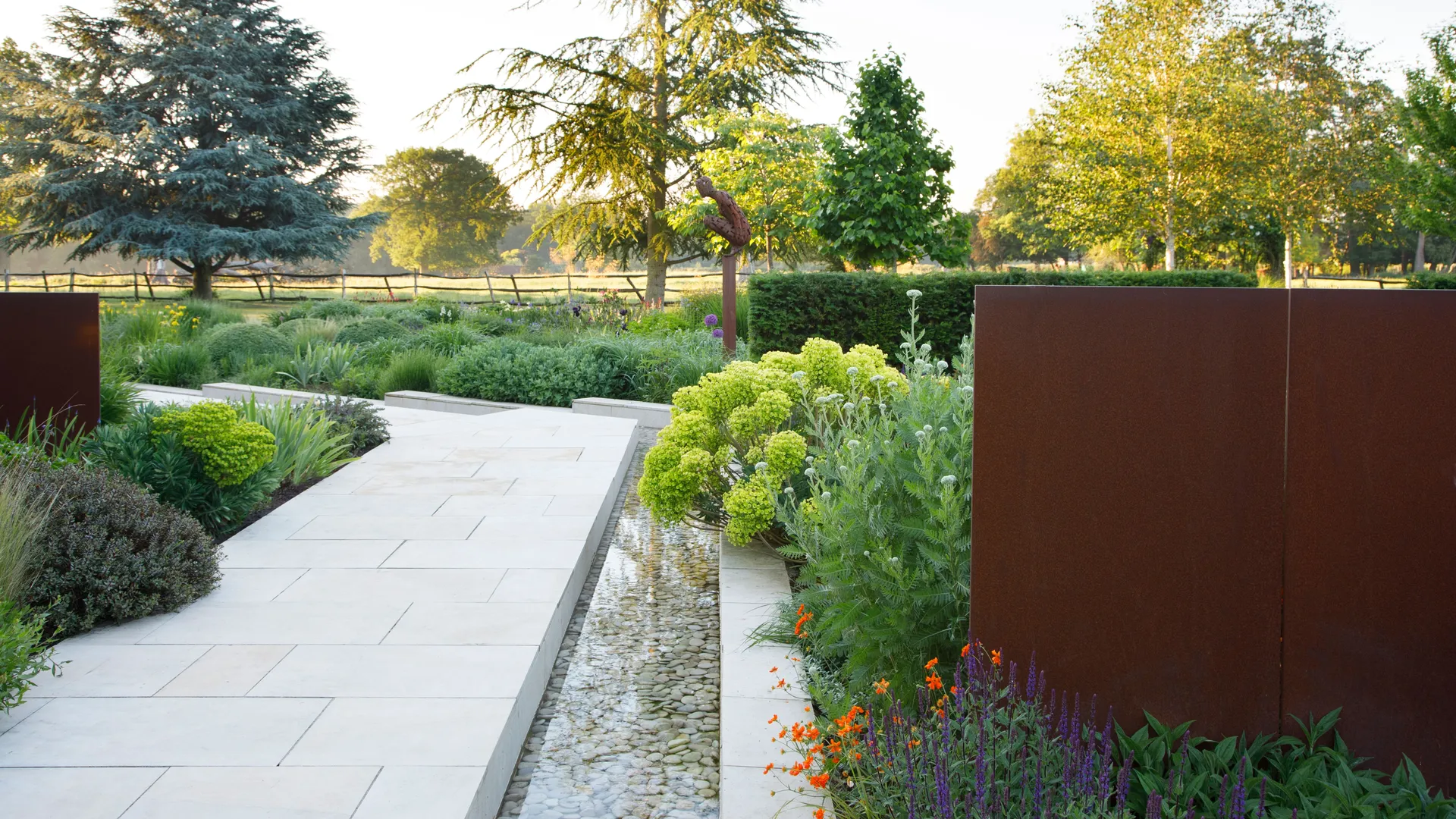
Boundary planting can create privacy without making a property feel boxed in. Trees, shrubs, grasses, climbers, and layered beds interrupt views while adding seasonal change, texture, and depth that a solid barrier cannot always provide.
The most effective boundary planting ideas rarely depend on a single row of identical plants. Layering different heights and forms usually creates softer screening while giving the landscape a more established appearance.
Start With the View You Want to Screen
Privacy planting works better when it responds to specific sightlines. A neighboring window may require taller screening in one short section, while a patio edge may only need medium-height shrubs to create a comfortable sense of separation.
Walk through the property and identify where privacy actually matters. Screening every inch of the boundary can reduce light, airflow, and usable garden space without improving how private the important areas feel.
Evergreen plants are useful where year-round coverage matters, but combining them with seasonal species can prevent the boundary from becoming a rigid green wall.
Layer Plants Instead of Building One Solid Screen
A mixture of heights creates depth. Taller plants can establish the background, medium shrubs can fill gaps, and lower planting can soften the boundary at ground level.
People looking through outdoor landscaping concepts may notice that effective screening often relates closely to patios, pools, paths, and gathering areas. Privacy feels strongest when planting protects the places people actually use.
Spacing matters. Plants installed too closely may look finished immediately, but crowding can create maintenance problems as they mature.
Make the Boundary Feel Connected to the Home
The planting palette should relate to the character of the house and garden rather than functioning as an isolated hedge. Repeating plants already used near an entrance, terrace, or foundation can visually connect the property’s edges to its central spaces.
Broader home and garden inspiration can be useful when considering texture and atmosphere. Fine grasses create movement, broad-leaved shrubs feel substantial, and climbing plants can soften otherwise hard fencing.
| Planting Layer | Main Role | Design Effect |
|---|---|---|
| Tall shrubs or trees | Block higher views | Creates background |
| Medium shrubs | Fill sightline gaps | Adds density |
| Grasses or perennials | Soften lower edge | Adds movement |
| Climbers | Cover vertical surfaces | Reduces fence dominance |
Leave enough access for pruning, fence maintenance, and inspection. Dense boundary planting becomes frustrating when reaching the structure behind it requires damaging plants.
Respect the Actual Property Line
Privacy planting should remain manageable within the space available. Reviewing broader property boundary considerations can reinforce an important point: attractive landscaping still needs to respect ownership lines, neighboring structures, access routes, and future maintenance.
Consider mature plant size rather than nursery size. A shrub that looks modest when purchased may eventually extend much farther than expected.
Roots deserve attention too, particularly near walls, paving, drainage features, and other structures. Choosing species suited to the available planting strip is usually easier than repeatedly controlling plants that naturally want more room.
Common Privacy Planting Mistakes
A fast-growing plant isn’t automatically the best screening plant. Rapid growth can also mean frequent pruning, aggressive spread, weaker structure, or a mature size that overwhelms the boundary.
Another mistake is creating a perfectly uniform row and expecting it to remain flawless. If one plant fails, the gap can become obvious. Mixed or staggered planting is often more forgiving because the privacy effect doesn’t depend on every specimen remaining identical.
Don’t forget winter conditions. Deciduous plants may provide excellent summer screening but reveal previously hidden views after leaves fall.
Frequently Asked Questions
How can I make boundary planting look natural?
Use staggered spacing, varied heights, repeated plant groups, and a limited palette rather than lining up many unrelated species. Let taller plants form the background while lower planting creates a gradual transition toward the lawn or path.
Are evergreen plants necessary for privacy?
They are useful for year-round screening but don’t need to make up the entire planting scheme. Combining evergreens with deciduous shrubs, grasses, or flowering plants can provide reliable coverage with more seasonal interest.
How close should privacy plants be placed to a boundary?
That depends on the mature width of the selected species and the space needed for pruning or maintenance. Planning from mature dimensions usually prevents plants from constantly pushing through fences or onto neighboring areas.
Build Privacy in Layers
A softer boundary comes from controlling views rather than hiding everything behind one dense wall of foliage. Identify the important sightlines, choose plants for their mature size, and layer them so the screening feels gradual. The result can provide privacy while still allowing the garden to feel open, planted, and connected.