
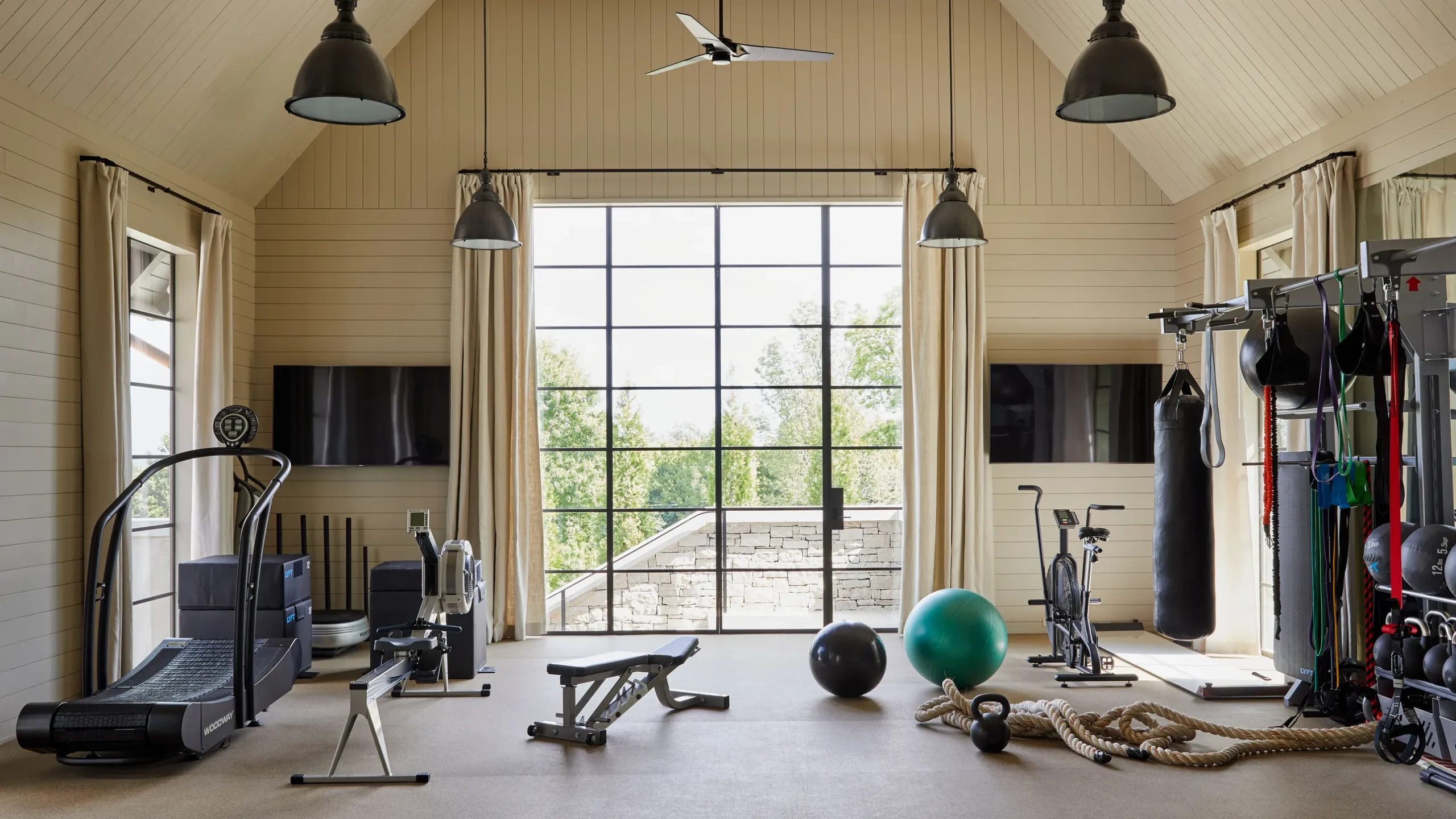
A useful stretching area doesn’t require a permanent home gym. Smart stretching space ideas focus on temporary floor clearance, easy equipment storage, and enough room for controlled movement. In a small bedroom, office, living room, or multipurpose space, the best setup may disappear completely once the session ends, allowing fitness and normal household activities to share the same square footage.
Measure Movement Space Instead of Room Size
A small room may work perfectly well if one section of floor can be cleared when needed. Rather than judging the room by total dimensions, consider where your arms and legs can move without striking desks, lamps, shelves, or sharp furniture edges.
Design inspiration built around flexible room inspiration can help when furniture needs to perform multiple jobs. Lightweight pieces, nesting tables, and movable stools make temporary exercise zones easier to create.
Mark a Repeatable Floor Zone
A rug edge, floorboard line, or furniture position can act as a visual marker. That makes it easier to recreate the same clear area instead of rearranging the room differently each time.
If possible, keep the floor itself fairly simple. Too many decorative baskets or small tables create extra work before every session.
Store Fitness Gear Near the Activity Area
Resistance bands, stretching straps, small towels, yoga blocks, and mats don’t need a dedicated cabinet. A narrow basket, under-bed container, wall hook, or bench with storage may handle everything.
Rooms that open toward patios or covered outdoor areas can also borrow from flexible home activity ideas. Having an indoor setup and an optional protected outdoor spot gives you another choice when the main room is occupied.
| Space Challenge | Practical Response | Why It Helps |
|---|---|---|
| Tight floor area | Move one light table | Creates temporary clearance |
| No equipment closet | Use a narrow basket | Keeps gear together |
| Shared room | Choose foldable items | Restores room quickly |
| Hard floor | Store a rollable mat | Adds a defined surface |
Use Walls Without Crowding Them
Walls can provide useful storage without sacrificing floor area. A few secure hooks may hold a mat bag, resistance bands, or lightweight accessories.
Keep equipment away from walkways and doors. Storage should make the room safer and faster to reset rather than creating new obstacles.
Broader spatial planning ideas can also encourage you to think about circulation. The path through the room matters as much as the exercise zone itself, especially in compact homes where several people share the same space.
Make Lighting and Ventilation Practical
Bright overhead lighting isn’t always necessary, but you should be able to see the floor and nearby furniture clearly. A shaded lamp or adjustable ceiling light may be enough for early-morning or evening routines.
Fresh air can make the area feel more comfortable. Open a window when conditions allow, or use the room’s normal ventilation rather than filling the corner with extra equipment.
Keep drinks where they won’t be kicked or spilled. A nearby shelf or stable side surface is usually better than placing a bottle directly beside your feet.
Where Small-Room Fitness Plans Often Fail
Many compact fitness setups fail because too much equipment is purchased too early. Large racks, permanent benches, and multiple storage bins can consume the exact floor space needed for movement.
Another mistake is choosing furniture that is technically movable but awkward to shift. A heavy coffee table that must be dragged across the room every morning creates unnecessary resistance to using the space.
Avoid storing exercise gear in several different rooms. The fewer preparation steps required, the easier it becomes to convert the room and put it back afterward.
Frequently Asked Questions
How much equipment is needed for a small stretching area?
Very little may be necessary. A mat and one small storage container can create a workable starting point. Add equipment only when you know it will be used regularly.
Can a home office double as a stretching room?
Yes. A rolling chair and compact desk arrangement can make temporary floor clearance possible. Keep cables organized so the movement area can be cleared without creating trip hazards.
Should a stretching space be permanent?
Not necessarily. In a small home, a convertible area may be more practical. The important feature is being able to create and restore the space quickly.
Make Flexibility Part of the Room Design
The most useful small-room fitness area may be one you barely notice when it isn’t being used. Prioritize clearable floor space, nearby storage, easy-to-move furniture, and a predictable setup routine.
Start with the room you already have before adding specialized furniture. When converting the space takes only a few simple actions, stretching can fit into the home’s normal rhythm without requiring a dedicated gym.


