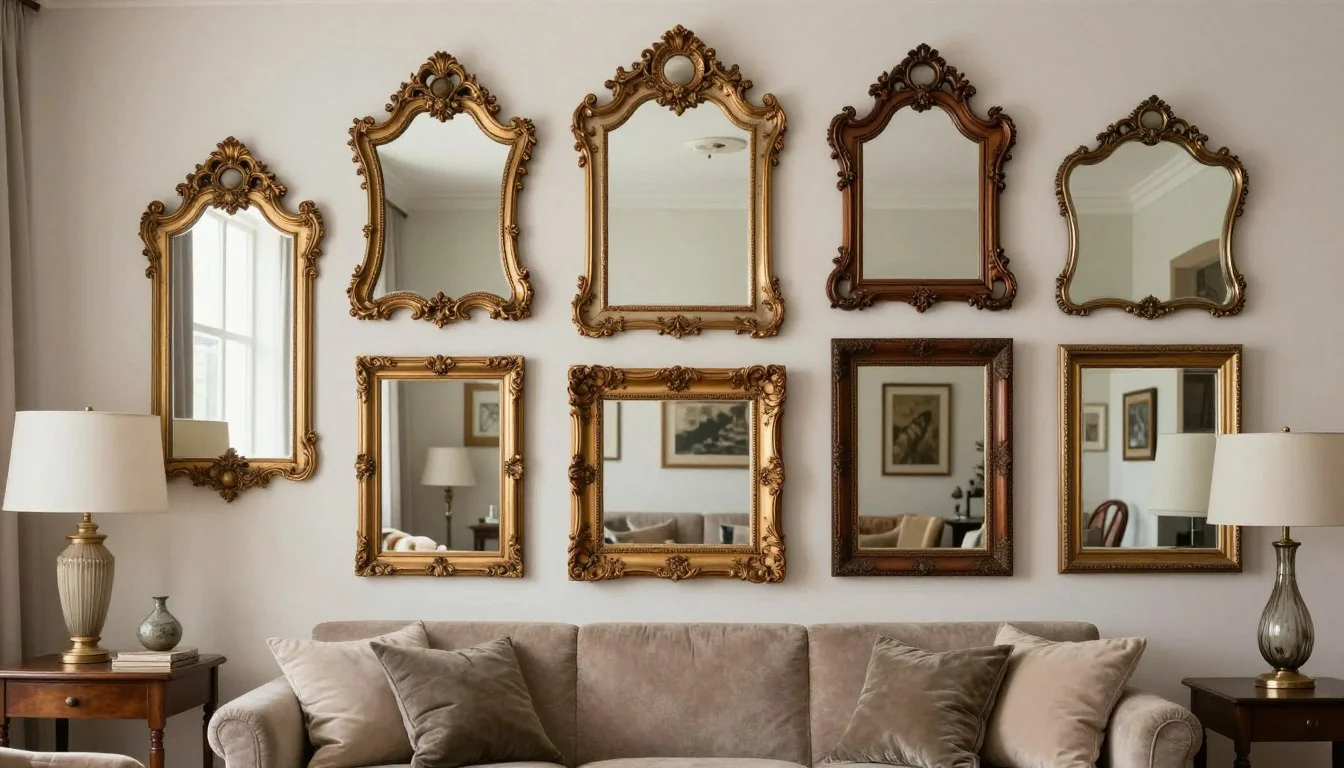
Antique mirror brings reflection into a room without the sharp, almost clinical clarity of new mirrored glass. Its mottled silvering, smoky patches, and uneven tone create movement while softening whatever appears in the reflection. That makes it useful for backsplashes, cabinet panels, furniture, and feature walls where a standard mirror might feel too bright.
Used selectively, it can add age without making an interior look themed.
Understanding the Appeal of Aged Reflection
A new mirror duplicates a room almost perfectly. Antique mirror behaves differently: areas of oxidation, clouding, and variation interrupt the image, making reflection part of the texture rather than the entire point.
That can be especially helpful in dining rooms, bars, and living spaces. You still gain a sense of depth and reflected light, but people aren’t constantly faced with a crisp reflection of themselves.
Pattern Matters More Than People Expect
Some antique mirror finishes have dramatic dark spotting, while others look lightly fogged. A sample should be viewed from several feet away because small chips rarely reveal how busy a full panel will feel.
Antique Mirror Behind Shelving and Bars
Installing aged mirror behind shelves can visually double glassware, lighting, and decorative objects while keeping the backdrop atmospheric. It works particularly well with dark timber, painted cabinetry, and warm metal details.
Observing architectural entertaining spaces can offer useful lessons about layering reflective surfaces behind furniture and lighting. Indoors, the same technique allows an antique mirror to become background texture instead of the sole decorative feature.
Avoid crowding the mirrored surface with too many objects. The reflections already create visual duplication, so sparse shelves often look more considered.
Adding Character to Cabinet Doors
Antique mirror inserts can transform wardrobes, sideboards, kitchen cabinets, and built-ins. They provide a reflective surface without exposing cabinet contents, making them useful when clear glazing would create too much visual clutter.
Many interior design concepts show how repeating a finish in small amounts can make a room feel connected. For example, an antique mirror cabinet might relate to an aged metallic lamp or darker furniture without requiring every element to look vintage.
| Use | Main Effect | Design Caution |
|---|---|---|
| Bar backsplash | Adds depth | Reflections can get busy |
| Cabinet insert | Conceals contents | Strong patterns may dominate |
| Fireplace surround | Creates character | Heat-safe installation matters |
| Feature panel | Reflects light softly | Large areas need restraint |
Mixing Antique Mirror With Modern Rooms
Aged mirror isn’t limited to traditional interiors. In fact, it often looks more interesting when paired with clean cabinetry, simple stone, or restrained modern furniture.
The contrast between old-looking reflection and comfortable contemporary interiors can keep a room from feeling overly polished. Straight-edged furniture, neutral upholstery, and modern lighting provide enough simplicity for the mirror’s irregular surface to stand out.
Frame choice also shifts the mood. Black metal feels more contemporary, while carved wood or ornate molding pushes the material toward a stronger vintage direction.
What People Often Get Wrong
More distressing doesn’t automatically create more character. Heavy black spotting across a large surface can quickly become visually dominant, especially in compact rooms.
Another mistake is trying to make several unrelated finishes look equally aged. Antique mirror already contributes patina, so pairing it with distressed timber, heavily weathered metal, patterned wallpaper, and ornate lighting may feel staged rather than collected. Usually one or two aged elements are enough.
Frequently Asked Questions
Can antique mirror be used in a kitchen?
Yes, particularly for cabinet fronts or backsplashes, provided the product and installation method are suitable for the location. Cleaning requirements should be considered around cooking areas where grease and splashes occur.
Does antique mirror make a room look larger?
It can increase perceived depth and reflect light, although the distorted surface gives a softer effect than a standard clear mirror. Placement opposite windows or lighting can strengthen that effect.
Is antique mirror suitable for modern interiors?
Yes. Its irregular surface can provide contrast against simple cabinetry, restrained furniture, and clean architectural lines. Limiting other decorative elements usually keeps the combination contemporary.
Use Patina as a Controlled Accent
Antique mirror works because it reflects without being perfectly reflective. Give it enough surrounding simplicity to show its texture, and choose the distress pattern as carefully as you would choose stone veining or timber grain. A restrained panel can introduce more history and atmosphere than an entire room filled with deliberately aged finishes.