

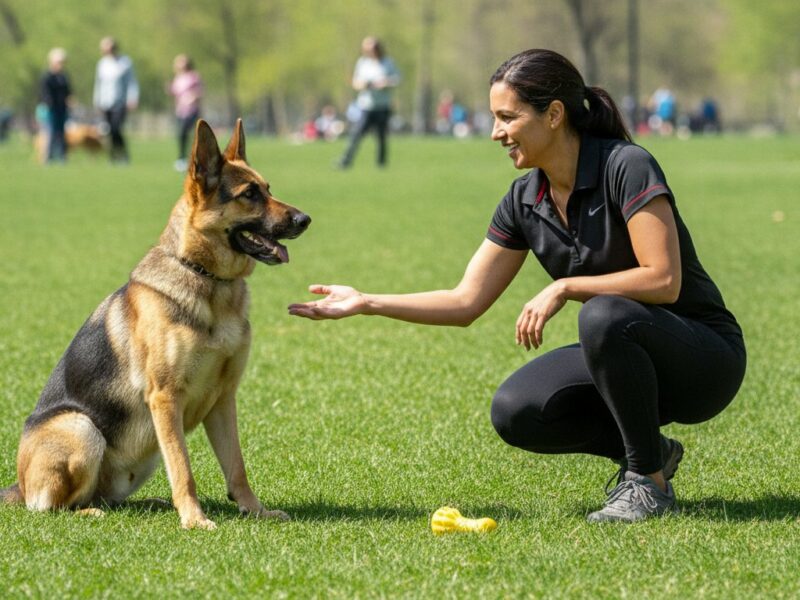
Pet dog training is not simply about teaching a dog to sit, stay, or come when called. The real goal is to build reliable behavior that holds up during everyday life, whether you are walking through a busy neighborhood, welcoming guests, managing distractions, or asking your dog to settle at home.
Good training gives dogs clear expectations while helping owners communicate with greater consistency. Rob’s Dog Training helps owners build practical obedience and better communication through structured training tailored to each dog’s needs.
Why Pet Dog Training Should Focus on Real Life
Practical training should support safety, communication, confidence, and daily routines for both dogs and the people who care for them.
Dogs do not learn in a vacuum. A dog may respond perfectly to “sit” in a quiet living room and then ignore the same cue when another dog, person, squirrel, or exciting scent appears.
That difference is important. Training needs to progress from simple environments to situations with gradually greater distractions. The goal is not perfect behavior in one controlled location. It is dependable behavior across the places and situations your dog actually experiences.
Successful pet dog training should include:
- Basic obedience and clear communication
- Leash manners and controlled movement
- Reliable recall
- Calm greetings and impulse control
- Appropriate behavior at home and in public
Start With the Behaviors That Matter Most
Owners sometimes try to teach too many skills at once. A better approach is to identify the behaviors that create the biggest difference in daily life.
Start with a short list. For many dogs, that may include coming when called, sitting or lying down on cue, staying in place, walking without constant pulling, and settling when excitement rises.
Once those skills are becoming consistent, add more difficult situations. This creates a foundation instead of asking the dog to solve every challenge at the same time.
Make Expectations Easy to Understand
Dogs learn through patterns. If jumping on people sometimes earns attention but is discouraged at other times, the dog receives mixed information. The same problem can occur with barking, pulling, rushing through doors, or ignoring recall.
Decide what behavior you want, then respond consistently. Everyone who handles the dog should understand the same basic rules.
Pet Dog Training Requires More Than Repetition
Repetition matters, but repeating a cue without changing the environment does not automatically create reliability.
Think about training as a progression:
- Teach the behavior in a low-distraction setting.
- Reinforce correct responses.
- Repeat until the dog responds consistently.
- Add one manageable distraction.
- Practice the same skill in a different location.
- Gradually increase distance, duration, or difficulty.
This helps the dog learn that a cue has meaning even when the environment changes.
For example, recall training should not begin with your dog loose in a busy park. Start where you can control the situation, build a strong response, and then gradually introduce greater distance and distractions. Reliability is developed through successful practice, not by repeatedly putting the dog in situations that are too difficult.
Leash Training Is a Daily-Life Skill
A dog that pulls toward every smell, person, or animal can make an ordinary walk frustrating. Leash training should teach the dog that staying responsive to the handler is part of moving through the world.
Begin in an environment where your dog can pay attention. Reinforce a loose leash and calm engagement, then gradually work around more interesting distractions.
If the dog is too stimulated to respond, the environment may simply be too difficult at that moment. Create more distance, lower the challenge, and return to a level where the dog can succeed.
Recall Can Improve Safety and Freedom
A reliable “come” cue is one of the most valuable skills a dog can learn. It can help owners respond when a gate opens, a leash slips, or a dog becomes separated from its handler.
Build recall carefully. Use a clear cue, make responding worthwhile, and practice in controlled settings before expecting the dog to return reliably around major distractions.
Do not reserve recall only for moments when the fun is ending. If “come” always means the walk is over or the dog loses access to something enjoyable, the cue can become less appealing.
Calm Behavior Is a Skill Worth Teaching
Many unwanted behaviors begin with excitement. Jumping, barking, rushing through doors, pulling toward other dogs, and struggling to settle can all become harder to manage when the dog has not learned how to pause and respond.
Teach calm behavior deliberately. Reward appropriate settling, practice waiting before access to exciting things, and avoid allowing frantic behavior to become the easiest route to attention or rewards.
This is not about suppressing a dog’s personality. It is about helping the dog learn when excitement is appropriate and when calm behavior is expected.
Choosing the Right Training Format
Different dogs and households have different needs. Some owners want to participate directly in every lesson. Others have demanding schedules and need a more immersive option.
Rob’s Dogs currently offers Board & Train and Private Lessons. Board & Train is designed for owners with busy schedules, while Private Lessons provide direct, one-on-one guidance for owners who prefer a hands-on approach. The company also begins the process with a behavioral assessment or call to discuss goals and determine an appropriate plan.
Keep Progress Moving Forward
Training should continue after a dog learns the basics. Short practice sessions help maintain obedience and prevent skills from becoming dependent on one location.
Build training into normal routines:
- Ask for a sit before opening the door.
- Practice a calm wait before meals.
- Reinforce loose-leash walking during outings.
- Practice recall in safe, controlled spaces.
- Reward calm behavior when visitors arrive.
- Change locations so skills become more adaptable.
These small moments add up. Training does not always need to look like a formal lesson.
When Professional Guidance Makes Sense
Professional help can be valuable when a dog is struggling with multiple behaviors, the household has tried several approaches without consistent results, or the owner is unsure how to progress safely.
A qualified trainer can observe the dog, identify patterns, explain what may be contributing to the behavior, and create a practical plan. Rob’s Dogs states that its behavioral assessment includes observing the dog’s behavior, identifying contributing factors, demonstrating starting steps when possible, and outlining a training plan.
Build Skills That Work Beyond the Training Session
The best pet dog training is measured by what happens after the lesson ends. Can your dog respond when visitors arrive? Can you walk without being dragged? Can your dog disengage from a distraction and listen? Can you trust the response when the environment becomes more challenging?
Those are the outcomes that make training meaningful.
Focus on practical skills, consistent expectations, gradual exposure to distractions, and owner participation. With the right structure and regular practice, training becomes less about controlling every moment and more about teaching a dog how to make better choices.
If you are looking for professional guidance tailored to your dog’s behavior and your goals, learn more about Rob’s Dogs and its training options at the official Rob’s Dogs website.