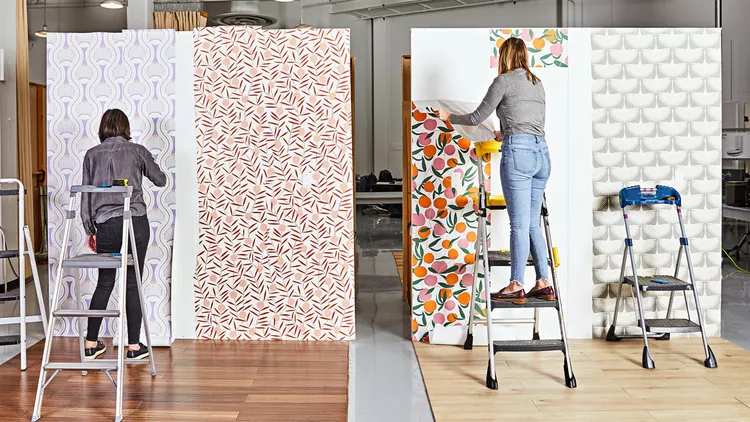
Peel and stick surface ideas can change the look of kitchens, bathrooms, workspaces, and storage areas without removing the original finish underneath. Adhesive films, tiles, and decorative sheets work particularly well on small, smooth surfaces where a permanent replacement would create more cost and disruption than the area justifies.
The trick is choosing surfaces carefully. Not every temporary material belongs everywhere.
Focus on Smooth, Low-Stress Surfaces
Flat cabinet panels, shelf backs, desk tops, drawer fronts, and decorative wall sections are natural candidates. Smooth surfaces provide better contact and fewer visible bumps beneath thin adhesive materials.
Exploring different room refresh inspiration can help identify areas where a surface change could provide enough contrast without requiring a larger remodeling project.
Start With the Most Visible Section
Updating one prominent surface often creates more impact than covering several minor ones. A kitchen island panel, open shelf backing, or compact desk can become the visual anchor.
That approach also limits the amount of material needed.
Use Temporary Finishes to Test a Look
Peel and stick products are useful for experimenting with colors and patterns you may not want permanently. Stone effects, wood tones, terrazzo patterns, and solid colors can reveal whether a finish works with the room before a more expensive replacement is considered.
Comparing temporary update ideas with the finishes already in your room can make it easier to judge whether contrast or coordination will look more convincing.
| Surface | Possible Finish | Main Consideration |
|---|---|---|
| Shelf back | Patterned film | Easy alignment |
| Drawer front | Solid color | Edge wrapping |
| Desk top | Wood effect | Wear resistance |
| Wall section | Peel-and-stick tile | Surface flatness |
Use Small Areas Where Detail Matters
Temporary films can be especially effective inside cabinets, drawers, and open shelving. These locations allow color or pattern to appear in controlled doses.
A plain bookcase, for example, can feel much more finished when the back panel has a contrasting surface. Everyday renovation guidance can also help generate practical ideas for identifying small zones where effort has a noticeable visual payoff.
Consider How the Surface Gets Used
Decorative film on a rarely touched shelf has an easier job than film on a heavily used countertop. Heat, moisture, friction, and cleaning can shorten the life of some adhesive materials.
Match the product to the actual conditions rather than choosing on appearance alone.
Prepare the Surface Carefully
Dust, grease, loose paint, and texture can prevent proper adhesion. Clean the area using a method appropriate for the original material, then let it dry fully before installation.
Measure before cutting and leave enough extra material where edges need to wrap. A sharp blade and straight edge can improve the finish around corners.
Where Temporary Surface Updates Can Fail
The biggest misconception is assuming “peel and stick” means suitable for every location. High heat, constant moisture, rough surfaces, and damaged finishes can cause lifting, bubbling, or poor adhesion.
Cheap-looking results often come from exposed seams or poorly finished edges rather than the pattern itself. Taking extra time at corners and transitions usually matters more than covering a larger area quickly.
Frequently Asked Questions
Can peel and stick material go over existing tile?
Some products are designed for smooth tile, but grout lines and uneven surfaces may remain visible. Product instructions should be checked because adhesion and removal behavior vary between materials.
Are peel and stick surfaces waterproof?
Some products resist moisture, but that does not mean every adhesive film is suitable for constant water exposure. Check whether the specific material is intended for kitchens, bathrooms, or other damp locations.
How long can a temporary surface update last?
Lifespan depends on material quality, preparation, heat, moisture, cleaning, and daily wear. A protected cabinet panel may last much longer than a frequently handled work surface.
Update the Right Surface First
Temporary materials are most convincing when used where their strengths match the job. Choose smooth surfaces, prepare them carefully, and use small projects to test unfamiliar finishes before covering larger areas. A modest change on the right surface can refresh a room while keeping future options open.