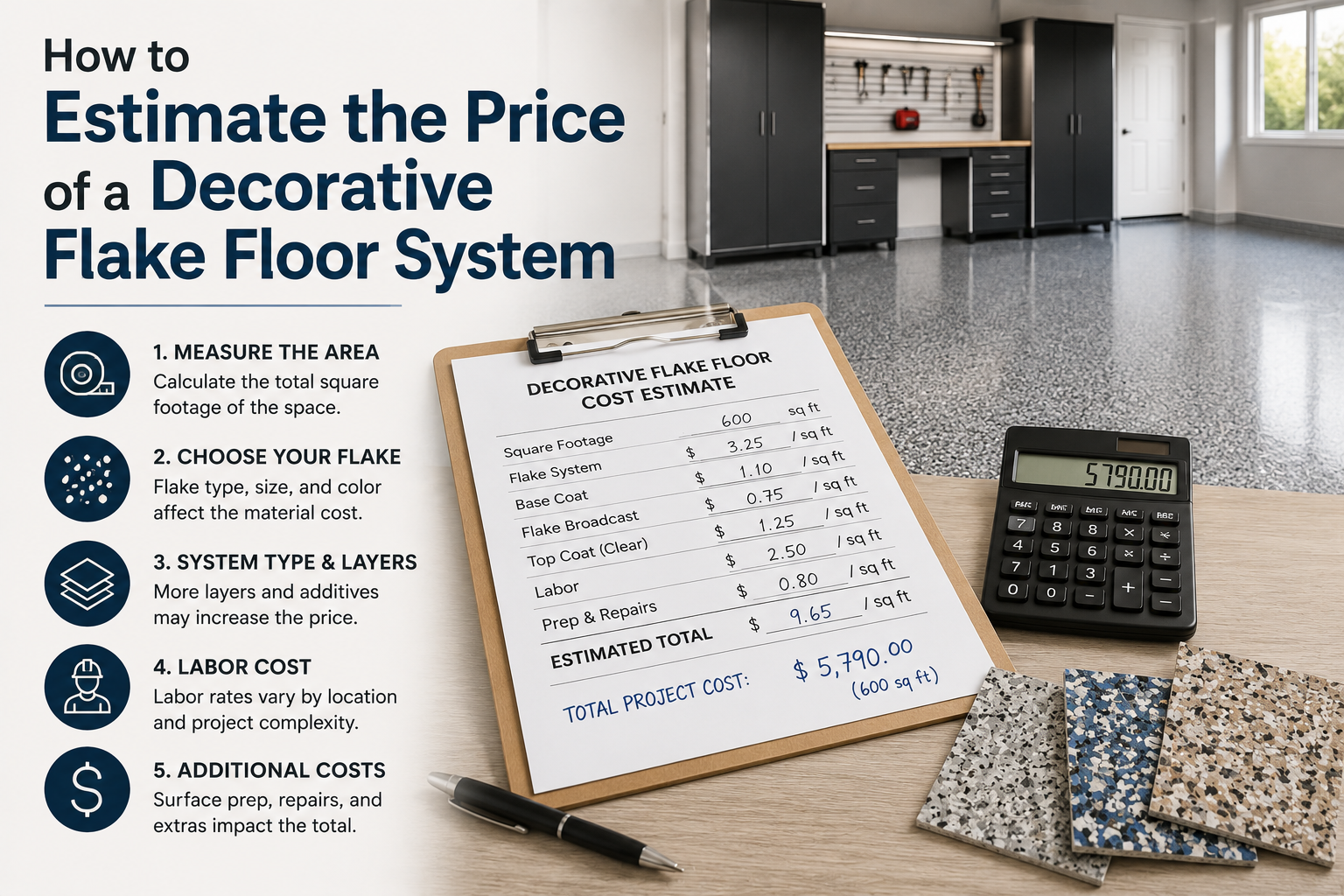
Decorative flake flooring has become a popular choice for garages, basements, workshops, and commercial spaces because it combines durability with an attractive finish. The small vinyl flakes added to the coating create a textured appearance, help hide minor surface marks, and allow property owners to choose from several color combinations. However, estimating the price of a decorative flake floor is not as simple as multiplying the room size by a standard rate. Every concrete surface is different. The final estimate depends on the total floor area, condition of the concrete, surface preparation, coating system, flake coverage, labor requirements, and protective finish. Understanding these factors can help homeowners and business owners prepare a more realistic budget.
Understand What a Decorative Flake Floor Includes
A decorative flake floor is made from several layers rather than one basic coat of paint. The process normally begins with mechanical surface preparation, followed by a primer or pigmented base coat. Decorative flakes are then broadcast over the wet coating before a clear protective topcoat is applied.
When comparing professional epoxy flake flooring services, property owners should look at the complete flooring system rather than focusing only on the final appearance. A proper installation should include concrete preparation, minor repairs, a durable base coat, even flake distribution, and a protective finish suitable for the way the space will be used.
The quality and number of these layers influence both the initial price and the long-term performance of the floor. A lower estimate may appear attractive, but it may not include the same level of surface preparation, material quality, or topcoat protection.
Measure the Complete Floor Area
Square footage is one of the first factors used to estimate the price of a flake flooring project. To calculate the approximate floor area, multiply the length of the space by its width. For example, a garage measuring 20 feet by 22 feet has approximately 440 square feet of floor space. However, additional sections may also need to be included, such as:
- Concrete steps
- Storage areas
- Utility sections
- Raised curbs
- Workshop spaces
- Small adjoining rooms
- Vertical concrete edges
Property owners should measure the entire area that will receive the coating. Contractors may also inspect corners, wall edges, drains, and fixed equipment because these features can affect material usage and installation time.
Check the Condition of the Concrete
The existing condition of the concrete can significantly change the total project estimate. A clean, stable slab generally requires less repair work than a floor with deep cracks, moisture damage, oil contamination, or an old coating. Common concrete problems include pitting, surface scaling, uneven areas, expansion joints, and damaged edges. Oil stains may also require additional cleaning or treatment before the coating can bond properly. Small cracks can often be filled during preparation. Larger cracks or areas of damaged concrete may require more extensive repair. These repairs use additional materials and increase labor time, which is why two floors of the same size can have different installation prices.
Include Mechanical Surface Preparation
Proper preparation is one of the most important parts of a decorative flake floor installation. The coating must bond directly to a clean and properly profiled concrete surface. Professional installers commonly prepare concrete through diamond grinding or shot blasting. These methods remove weak surface material, open the pores of the concrete, and create a profile that allows the coating to adhere securely.
Additional preparation may include:
- Removing an old coating
- Grinding high spots
- Cleaning grease and oil
- Filling cracks
- Repairing damaged edges
- Vacuuming concrete dust
- Treating moisture-related concerns
A project that requires coating removal or extensive concrete repair will generally cost more than a floor that only needs standard grinding. However, reducing preparation to save money may result in peeling, bubbling, or early coating failure.
Consider the Type of Coating System
Not every decorative flake floor uses the same materials. Some systems use an epoxy base coat with a clear epoxy finish, while others use a polyaspartic or polyurethane topcoat for added durability and UV resistance. The right system depends on the location and expected use of the floor. A residential basement may have different performance requirements than a busy garage, warehouse, workshop, or retail environment.
Garages may benefit from a coating that resists vehicle fluids, hot tires, road salt, and abrasion. Commercial spaces may require additional chemical resistance, slip resistance, or a thicker protective system. Premium materials usually increase the initial estimate, but they may also provide better stain resistance, color stability, and service life.
Choose the Amount of Decorative Flake Coverage
Flake coverage can range from a light decorative broadcast to a full-broadcast system. Light coverage uses fewer flakes and allows more of the base-coat color to remain visible. Full coverage creates a denser and more uniform decorative surface. Full-broadcast systems require more flakes and may involve additional scraping or leveling before the topcoat is applied. As a result, they may require more material and labor. Custom color blends, specialty flake sizes, and unique combinations can also affect the price. Standard blends are usually easier to source, while custom designs may require special ordering or additional planning.
Evaluate the Protective Topcoat
The clear topcoat protects the decorative flakes and helps the surface resist scratches, stains, moisture, and chemicals. It also influences the gloss level, texture, and cleaning requirements of the finished floor. Some projects may use one clear coat, while others require a thicker or multiple-coat finish. Slip-resistant additives can also be included in spaces where water, snow, oil, or other liquids may create a safety concern. The correct topcoat should be selected according to the floor’s expected traffic and exposure. A heavily used garage or commercial space may need a stronger protective finish than a lightly used residential room.
Estimate Labor and Installation Complexity
Labor costs depend on more than the size of the floor. Installers must move equipment, prepare the surface, repair damage, mix materials, apply the coating, broadcast flakes, scrape the surface, and install the final topcoat.
Projects may require additional labor when they include:
- Multiple connected rooms
- Narrow corners
- Limited equipment access
- Concrete steps
- Vertical surfaces
- Fixed shelving or machinery
- Floor drains
- Extensive edge work
Weather and temperature can also affect installation planning, particularly in garages or areas with limited climate control. Contractors must apply materials within the correct environmental conditions and recoat windows.
Understand the Main Epoxy Flake Flooring Cost Factors
When reviewing an epoxy flake flooring cost estimate, it is important to check what the quoted price actually includes. A complete estimate should account for more than materials and square footage. The major pricing factors normally include the condition of the slab, required repairs, grinding or coating removal, base-coat quality, flake coverage, topcoat selection, labor, and project accessibility.
Moisture testing may also be recommended for basements, ground-level slabs, or concrete with signs of vapor transmission. If moisture levels are high, a vapor-control primer may be required before the decorative system is installed. Although this adds to the initial project price, it can help reduce the risk of future bubbling, delamination, or coating failure.
Compare Detailed Estimates Instead of Total Prices
A detailed written estimate makes it easier to compare flooring contractors fairly. Property owners should ask each installer to explain the preparation method, coating materials, number of layers, flake coverage, repair work, and warranty terms.
A lower estimate may exclude crack repairs, mechanical grinding, moisture protection, or a high-performance topcoat. In contrast, a higher estimate may include a more complete system designed for longer service life.
Useful questions to ask include:
- How will the concrete be prepared?
- Are crack repairs included?
- What type of base coat will be used?
- Is the floor receiving light or full flake coverage?
- What type of clear topcoat is included?
- Is slip resistance available?
- How long must the floor cure before use?
- What warranty is provided?
Clear answers can help property owners understand the value behind each estimate.
Planning a Flake Flooring Project in Woodland Park, NJ
Property owners in Woodland Park, NJ, should also consider local weather conditions. Garages in New Jersey may be exposed to rain, snow, road salt, mud, and temperature changes throughout the year. These conditions can influence the type of coating and topcoat needed for dependable performance.
A contractor should inspect the floor before recommending a system. An on-site evaluation allows the installer to identify cracks, moisture concerns, old coatings, access limitations, and repair needs that may not be visible in photographs.
Epoxy Shine provides decorative flooring solutions for property owners in Woodland Park, NJ, and surrounding areas. A professional inspection can help determine which preparation method, coating materials, flake coverage, and protective finish are appropriate for the project.
Final Thoughts
Estimating the price of a decorative flake floor system requires more than measuring square footage. The condition of the concrete, amount of repair work, preparation method, coating quality, flake coverage, topcoat, and installation complexity all influence the final estimate.
The best way to prepare a realistic budget is to measure the complete space, decide on the preferred finish, and request a detailed on-site assessment. A properly prepared and professionally installed flake floor may cost more initially than a basic coating, but it can provide greater durability, easier maintenance, and better long-term value.